CONTACT US
Hero Title Text Cta image 1

Expert Revision Rhinoplasty

  • Global expert in primary, revision, and ethnic rhinoplasty procedures.
  • Award-winning surgeon, trusted by celebrities, royalty, and international patients.
  • Uses advanced piezo techniques and twilight sedation for natural results.
BOOK A CONSULTATION

What Is Revision Rhinoplasty and Why Expertise Matters

Revision rhinoplasty, also known as secondary rhinoplasty, is a highly individualised surgical procedure designed to address unsatisfactory results from a previous nose surgery. This may include unresolved breathing problems, irregular contours, structural weaknesses, or cosmetic changes that simply don’t feel right to the patient. Unlike primary rhinoplasty, revision nose surgery must account for internal scarring, altered anatomy, and weakened support structures, making it considerably more complex.

Achieving a natural-looking, functional result in these cases requires a deep understanding of nasal anatomy, advanced surgical skill, and a personalised approach. Dr De Silva is a renowned expert in this field, with extensive experience treating patients from across the UK and abroad. His precision techniques and artistic eye ensure that each procedure is personalised to restore harmony and confidence while prioritising safety, structure, and long-term satisfaction.

Video - testimonial
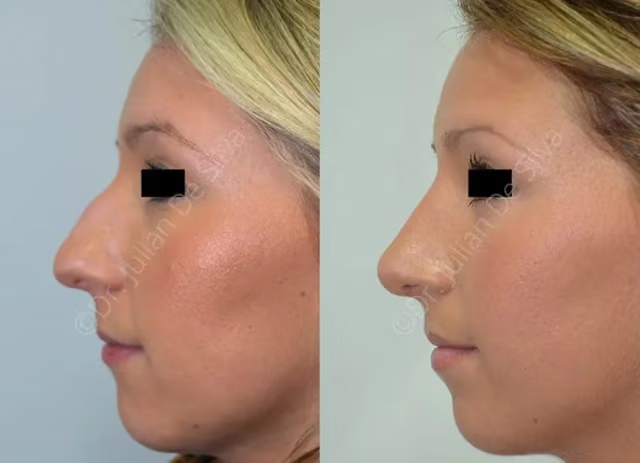
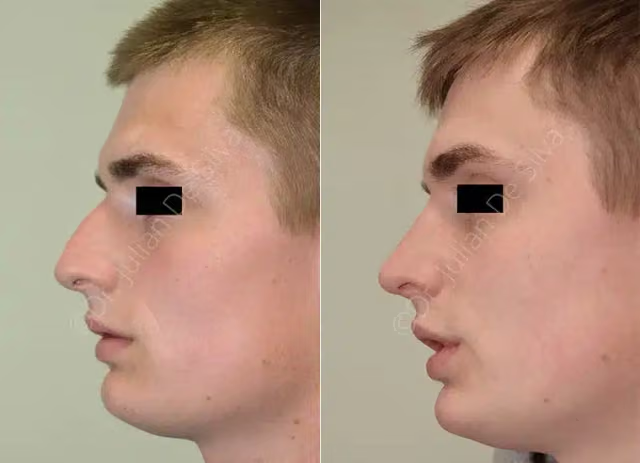
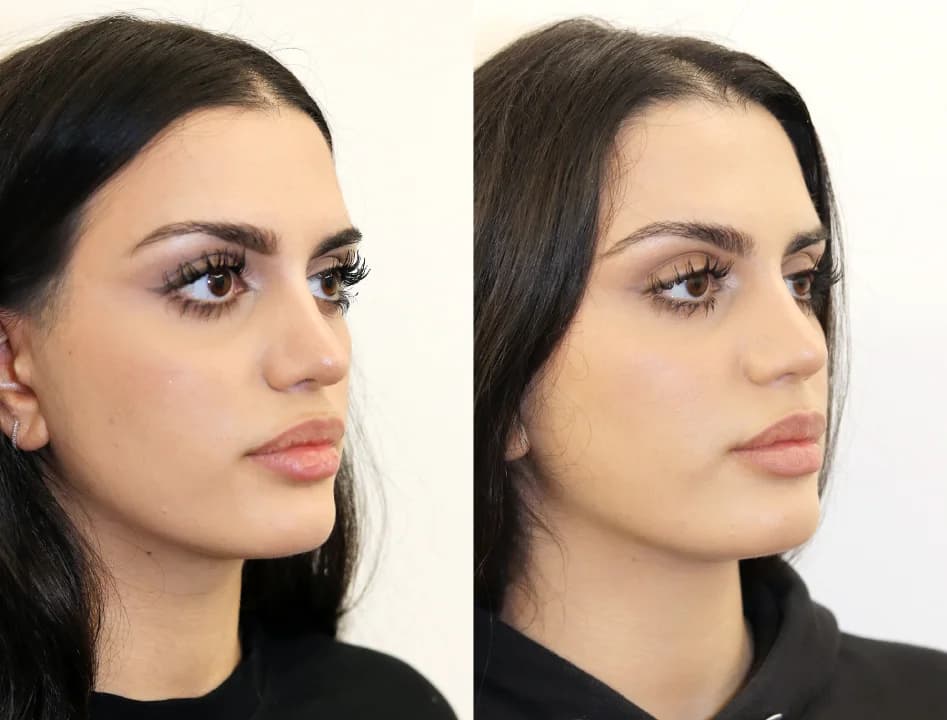
nose correction surgery: female before and after revision rhinoplasty

Why Patients Seek Secondary Rhinoplasty

Approximately 30% of Dr De Silva’s rhinoplasty patients come to him for revision nose surgery after having undergone a previous procedure elsewhere that did not meet their expectations. When a first surgery fails to deliver the desired outcome, whether functionally or aesthetically, it's essential to choose a surgeon with the expertise to address the complexities of corrective nasal surgery.

Patients often turn to Dr De Silva not only for his technical skill but also for his understanding of the emotional toll a disappointing result can take. Common reasons for seeking nose job revision include:

    • Ongoing breathing difficulties or structural collapse that were not resolved, or were caused by the initial surgery
    • Cosmetic concerns such as asymmetry, irregular contours, or an overly reduced nasal shape
    • Emotional distress and loss of confidence due to results that feel unnatural or simply “not right”
    • Visible scarring or poor healing, which may have altered the appearance or function of the nose

Dr De Silva offers a compassionate, solution-focused approach for patients who are seeking not just correction, but peace of mind.

World Class Facial Cosmetic and Plastic Surgery

Revision Rhinoplasty Before & After Gallery

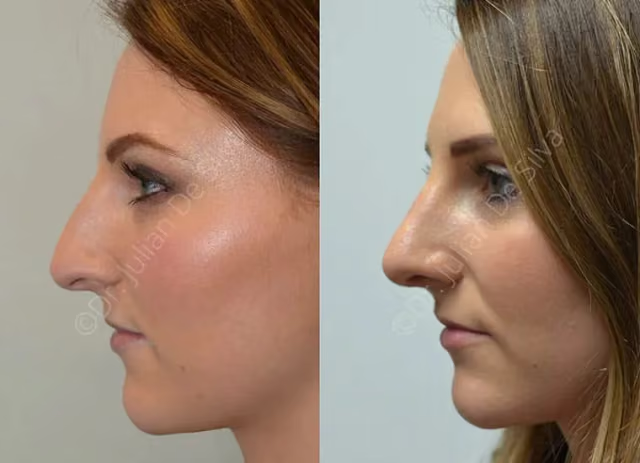
Explore real-life revision rhinoplasty transformations by Dr De Silva and envision the results you could achieve.

Rhinoplasty Patient 25
Rhinoplasty Patient 30
Rhinoplasty Patient 28
Cmp Gallery Slider image 2
Cmp Gallery Slider image 3
Cmp Gallery Slider image 4

Common Challenges With Revision Rhinoplasty Surgery

Structurally, the nose is one of the most intricate areas of the face, and once surgery has been performed, each patient presents with different anatomical changes and scarring. The extent of scarring depends on factors such as the previous surgical technique, the original surgeon, the patient’s ethnicity, genetics, and healing response. A successful outcome depends not only on the extent of the changes needed but also on truly understanding the patient’s goals and concerns.

Common concerns include:

  • Tip issues: pinching, asymmetry, or under-projection
  • Bridge irregularities: polly beak, saddle deformity, residual bumps, or a wide nasal roof
  • Nostril problems: flaring, collapse, or asymmetry
  • Overall proportion: nose appearing too short or too long
  • Breathing difficulties

Many of these issues are minor and correctable, though healing responses vary. Each revision nose surgery case requires a bespoke plan to restore both form and function with precision.

Worried About Further Surgery After a Difficult Rhinoplasty Recovery?

Many of our patients feel understandably anxious about revision nose surgery, especially after a disappointing result from their first procedure. Dr De Silva takes the time to have thorough, honest discussions about further treatment options, recovery expectations, and the emotional support available throughout the process. Our goal is to provide the best possible experience and build long-term relationships with our patients, offering continued care and guidance for years to come.

Why Choose  Dr. De Silva 
for a Harley Street Facelift?

Why Choose Dr. De Silva for Revision Rhinoplasty?

  • London’s Harley Street has long been recognised as a global centre for medical excellence, combining cutting-edge facilities with rigorous safety standards and internationally respected specialists. Dr De Silva is widely regarded as a leading authority in revision rhinoplasty in this renowned setting.
  • Over 30% of Dr De Silva’s rhinoplasty patients seek his expertise following previous surgery elsewhere, often to correct both functional and cosmetic concerns. Known for delivering natural, refined results, he has treated patients from across the globe who travel specifically for his specialist care.
  • A respected voice in the field, Dr De Silva has authored numerous book chapters and scientific publications on rhinoplasty and revision techniques. In 2017, he published A Complete Guide to Nose Surgery and Rhinoplasty, offering insights into both the art and science behind successful nasal surgery.
  • Patients trust Dr De Silva not only for his technical skill but also for his personalised approach to complex cases, making him a sought-after expert in revision nose surgery in London and beyond.

Discover the Surgical Techniques Unique to Nose Job Revision

Revision nose surgery is a more complex procedure with the presence of scarring and a change in the natural anatomy, and often requires additional specialist techniques to improve the aesthetic result. For many patients, Dr De Silva uses combination techniques, including cheek implant surgery, chin augmentation, and skin resurfacing, to enhance the results.

Secondary rhinoplasty surgery is an outpatient procedure and can take between three to four hours. The surgery takes approximately 30-50% longer than a primary rhinoplasty.

1

Why is Graft Material Required in Revision Surgery?

  • Often with revision surgery, anatomy is weakened, and graft material (cartilage) is required to improve the nose shape and structure.
  • When patients have had too much tissue removed, there can be a deformity and compromise of the structural integrity of the nose. These cases will require a tissue graft of cartilage or bone from donor sites such as the ear, temple, or ribs.
  • Dr De Silva prefers to harvest cartilage from your nose (septum) if possible. However, in many cases, this is not an option, as it may have already been harvested in the original procedure. When this is the case, Dr De Silva may use ear or rib cartilage. He prefers not to use the patient’s rib cartilage due to the scar it leaves behind, as well as potential risks such as injury to the lung or chest. Instead, Dr De Silva obtains irradiated rib cartilage from a rib bank in the US and has the flown in specially for each patient. Rib cartilage is a safe option that works well to support or add to areas of collapse. It works particularly well as a source of support for the nasal bridge, which requires a long, straighter graft. No graft material is perfect, and the potential downsides of cartilage grafts are reabsorption of the graft or warping.
2

Structural Rebuilding Techniques

  • Simpler cases will remove some excess tissue or cartilage that was missed in the first surgery. There are also cases of straightening out a crooked nose, and the most complicated cases will require a complete overhaul of the nose.
3

Management of the Internal Nasal Valve Collapse

  • Many patients come to Dr De Silva hoping to improve their breathing after a previous surgery that didn’t fully resolve their concerns. Understanding breathing difficulties requires a careful, in-person assessment, as photographs and scans alone can’t capture the full picture. For some, additional tests like a CT (computerised tomography) scan may be needed to identify the root cause and help create a personalised plan to restore both comfort and function.

Can Revision Rhinoplasty Always Be Completed?

Dr De Silva is committed to achieving excellent results and will only recommend surgery if he believes it can realistically meet your expectations. If he feels that further nose correction surgery may not provide the desired outcome, he will advise you honestly and with your best interests in mind. To ensure a thorough understanding of your case, some patients are asked to provide their medical history and photographs of their nose before consultation, allowing us to offer the most informed and personalised advice.

What to Expect During Recovery After Revision Rhinoplasty

Recovery from nose job revision can take a little longer than a first-time procedure due to extra swelling and scar tissue. To help speed up healing and reduce discomfort, Dr De Silva uses specialised anti-inflammatory treatments and is a pioneer in regenerative medicine in the UK, offering patients the best possible support throughout their recovery journey.

Risks of Revision Rhinoplasty

Secondary rhinoplasty is a technically demanding procedure and, like all surgeries, carries some risk. While most patients experience safe and successful outcomes, it's important to be aware of potential complications, especially given the presence of scar tissue from previous surgery.

Potential Risks Include:

  • Breathing difficulties may persist or worsen
  • Irregularities in nasal shape or contour
  • Prolonged swelling or delayed healing
  • Scar tissue formation affects results
  • Graft movement or resorption
  • 2 words that fit on one line

Book a Personalised Revision Rhinoplasty Consultation

Take the first step towards feeling more confident in your appearance and breathing, choose nose correction surgery by Dr De Silva.

Schedule a one-to-one consultation with Dr De Silva to discuss your concerns and explore your treatment options.

Book a consultation

FAQ

What results can I realistically expect from revision rhinoplasty?

For most patients, meaningful and significant improvement is achievable. Dr De Silva is direct and honest at consultation about what revision surgery can and cannot achieve in each individual case and for a minority of patients, he will advise against further surgery if he does not believe it can meaningfully improve the outcome.

It is important to understand that previous surgery cannot be fully reversed; scar tissue and changes to the underlying anatomy are permanent features that revision surgery works around rather than eliminates. The goal is substantial improvement, not perfection. A small proportion of patients with particularly complex cases may benefit from two staged procedures rather than one. Dr De Silva will give you an assessment of what is realistically achievable for your nose at consultation, so that any decision to proceed is made with a clear and accurate understanding of the likely outcome.

I live outside the UK. Can I still have revision rhinoplasty with Dr De Silva?

Yes, a significant proportion of Dr De Silva's revision rhinoplasty patients travel from overseas, and his team has extensive experience coordinating care for international patients. Patients visit his Harley Street practice from more than 70 countries.

A virtual consultation is available as the first step for patients travelling from outside the UK, allowing Dr De Silva to review your photographs, discuss your surgical history and concerns, and advise on suitability before you make the journey. His team will assist with coordinating your visit, including timing your trip around the post-operative period; most patients need to remain in the UK for approximately three weeks following revision rhinoplasty before short-haul travel, and six weeks before long-haul travel. Advanced recovery technology including hyperbaric oxygen therapy and regenerative medicine is available to support faster healing during your stay.

Can a rhinoplasty really be corrected, or do I have to live with the result?

In the majority of cases, meaningful improvement is possible. Revision rhinoplasty, also called secondary or corrective rhinoplasty, is a procedure specifically designed to address unsatisfactory results from a previous nose job, whether that means an unnatural appearance, breathing difficulties, asymmetry, or a result that simply did not meet your expectations.

The key is choosing a surgeon with genuine, dedicated experience in revision cases. The nose is the most technically demanding area of facial surgery, and revision work adds significant complexity - existing scar tissue, altered anatomy, and potentially reduced cartilage all affect what is achievable. Dr De Silva will assess your nose individually at consultation and give you an honest, specific picture of what revision can and cannot improve in your case.

How long do I need to wait after my rhinoplasty before having revision surgery?

A minimum of 12 months from your original rhinoplasty is Dr De Silva's general recommendation before considering revision surgery. Revision surgery on a nose that has not fully healed is significantly more technically difficult, increases the risk of complications, and makes predicting the outcome much harder.

What many patients do not realise is that the nose takes considerably longer to fully settle than most other procedures. A result that appears unsatisfactory at six months may look quite different at 12 to 18 months once swelling has fully resolved. Attempting revision before that point means operating on tissue that is still changing, which compounds the challenge of already complex surgery. In cases where significant structural concerns are present, a longer wait may be advisable. Dr De Silva will assess the current state of your nasal tissues at consultation before making any recommendation.

Why is revision rhinoplasty more difficult than a primary nose job?

Revision rhinoplasty is widely regarded as one of the most technically demanding procedures in facial surgery. Several factors make it significantly more complex than a primary rhinoplasty.

Scar tissue from the original surgery alters the internal structure of the nose, making tissue planes harder to navigate and increasing bleeding risk. Cartilage that was removed or repositioned during the first procedure may be insufficient to work with, requiring Dr De Silva to harvest cartilage from elsewhere, most commonly the ear, to rebuild nasal structure. Skin quality may also be compromised if the previous surgery caused thinning or contracture. Each of these factors requires advanced surgical planning and a level of technical experience that goes beyond routine rhinoplasty. Dr De Silva treats a significant proportion of patients who come to him specifically for revision work, and this volume of complex cases builds the specific expertise revision surgery demands.

What concerns can revision rhinoplasty address?

The most common concerns Dr De Silva addresses in revision rhinoplasty include irregularities or asymmetry of the nasal bridge, tip pinching or over rotation, a scooped or over-reduced nasal profile, nostril asymmetry or collapse, residual humps or bumps on the bridge, and breathing difficulties caused or worsened by a previous procedure.

Some of these concerns are straightforward to correct, while others; particularly those involving significant structural compromise or skin quality issues, require more complex planning and realistic expectation setting. It is important to understand that while meaningful improvement is achievable in most cases, revision rhinoplasty cannot completely reverse previous surgery or restore the original anatomy. Dr De Silva will be direct about what is realistically achievable for your specific situation at consultation.

My previous rhinoplasty has affected my breathing. Can revision surgery help?

Yes, breathing difficulties caused or worsened by a previous rhinoplasty are one of the most common reasons patients seek revision surgery, and restoring nasal function is a central part of what revision rhinoplasty can achieve. Previous surgery can compromise breathing through over-reduction of structural cartilage, weakening of the sidewalls that support the airway, or a deviated septum that was not adequately addressed during the original procedure.

This is distinct from pre-existing breathing concerns in patients who have not had surgery; the presence of scar tissue, altered anatomy and potentially reduced cartilage makes the assessment and correction of post-surgical breathing difficulties more complex. An in-person examination is always required, and in some cases a CT scan may be needed to fully understand the cause before surgical planning can begin. Dr De Silva will assess both the functional and cosmetic aspects of your nose together, as the best revision outcomes address both concerns in a single procedure.

I had my rhinoplasty abroad. Can Dr De Silva still help me?

Yes. Dr De Silva regularly sees patients who have had rhinoplasty overseas and are seeking specialist correction in London. Patients travel to his Harley Street practice from more than 70 countries, and his team has extensive experience coordinating care for international patients seeking revision surgery.

Virtual consultations are available as a first step for those travelling from outside the UK, allowing Dr De Silva to assess photographs, discuss your concerns and surgical history, and advise on suitability before you make the journey. His team can assist with coordinating your visit, and comprehensive aftercare support is provided throughout recovery.

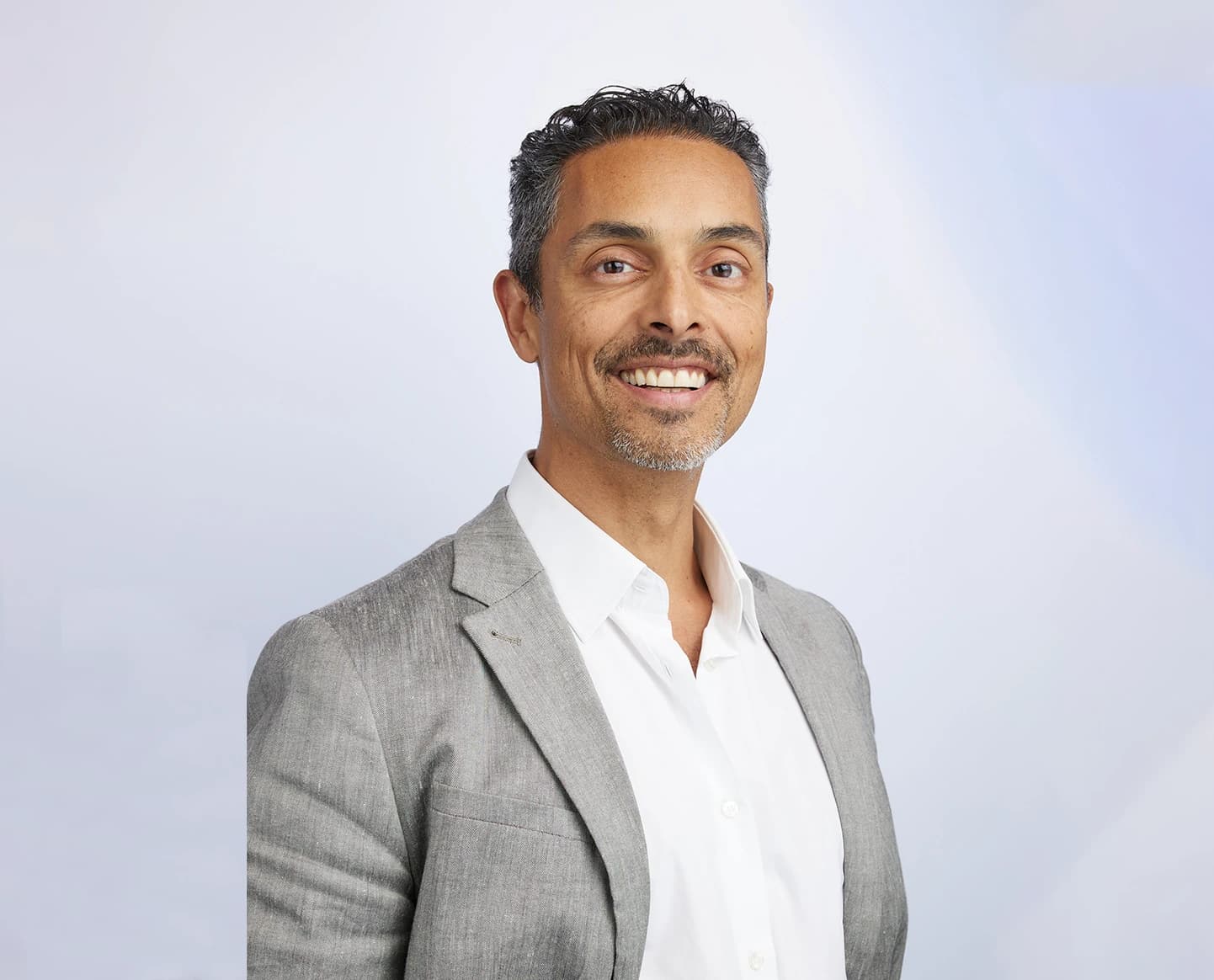
Written by JULIAN DE SILVA, M.B.B.S., M.D.

Dr. Julian De Silva is a renowned facial cosmetic surgeon at Harley Street, London, specializing in facelift, blepharoplasty, and rhinoplasty. Known for natural-looking results, he has treated top celebrities and uses advanced technology for fast recovery. Dr. De Silva is also a recognized author and educator in aesthetic surgery.

Call UsBook Consultation