



Natural Chin Implant Surgery in Harley Street, London
Chin implant surgery (mentoplasty) is a procedure that uses a silicone implant to add projection, definition, and balance to a recessed or underdeveloped chin. At Dr Julian De Silva's Harley Street clinic, chin augmentation is frequently combined with rhinoplasty or facelift surgery to optimise overall facial harmony, as the chin-nose relationship is one of the most critical proportional relationships in facial aesthetics.
 Achieve a natural jaw line with our signature chin implant
Small chin appearance as unbalanced and weak chin
Chin augmentation with a customised implant restores balance
Specialist in revision chin implants: misplacement & un-natural
A good chin looks 100% natural, fast recovery & hidden scar

Request a Consultation
FACELIFT SURGERY IN HARLEY STREET
Chin Impants/Augementation
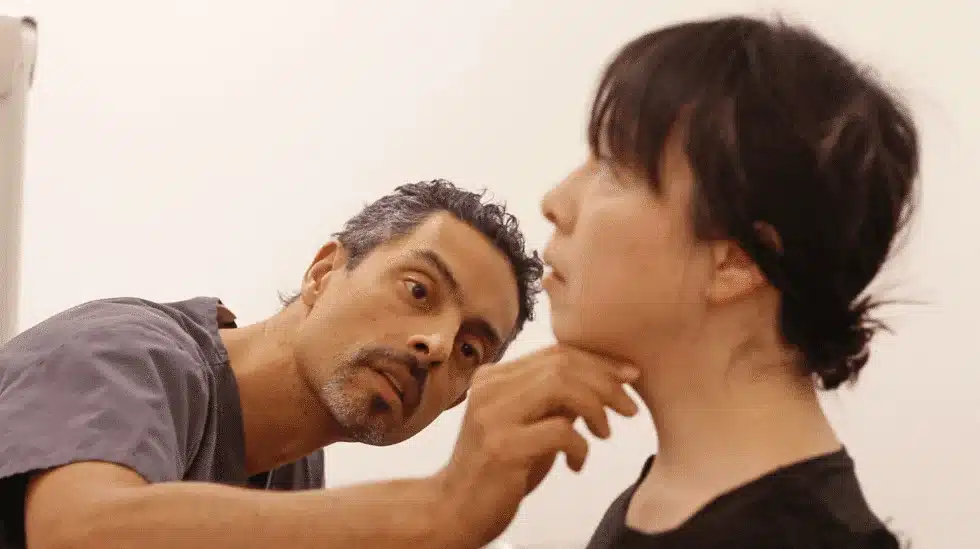
A chin implant when completed by an expert can give both facial balance and harmony and is a low-risk procedure that often looks great even days after the procedure.
Common symptoms patients notice with a small chin?
-
Facial Imbalance: A less prominent chin can disrupt facial harmony, making other features, such as the nose, appear disproportionately larger.
-
Weak Jawline Definition: A small chin may result in a less defined jawline, affecting the overall contour of the face.
-
Profile Concerns: From a side view, a recessed chin can create an unbalanced profile, leading to dissatisfaction with one’s appearance.
-
Double Chin Appearance: A small or receding chin can contribute to the appearance of a double chin, even in individuals without excess weight.
How is a chin implant inserted?
Dr De Silva inserts chin implants on their own as a single procedure, or commonly in conjunction with another procedure, such as rhinoplasty, facelift or neck lift surgery to enhance the result.
- Traditional Chin surgery involved making cuts into the jaw (mentoplasty) and resetting of the position of the jaw (orthognathic surgery). This involved substantial surgery with realignment of the jaw. There was a long recovery time, with a risk of crossbite and nerve injury. Many patients do not require this level of invasive procedure and by using a modern procedure can have a faster recovery with less issues or risks.
- Natural Chin. Dr Julian De Silva Customises each Silicone Implant to fit each patient’s individual jawline. Dr De Silva has revised many chin implants that patients have felt resulted in a ‘squarer’ or ‘unatural’ jaw line. Key is customising the implant for both the patients natural jaw bone (e.g. correcting asymmetry) and patients requirements. In principle are more attractive feminine jaw lines tend to be more ‘V-shaped‘ and a male jaw lines more ‘Square-shaped‘, however for the best natural results every implant has to be customised to the individual.
- The chin implant can be inserted under a local anaesthesia commonly with sedation, by making a small incision under the chin in a natural, hidden crease. Often patients look really good and natural just 1-week after procedure.
- Facial Balance. Chin implants provide a very safe way of avoiding mentoplasty while restoring natural proportions to the face. In a woman, a chin implant restores harmony and natural beauty. In a man, the chin is one of the features of sexual dimorphism and makes a male face more masculine and attractive.
- Why have a Chin Implant? A chin implant, or chin augmentation, is a procedure that Dr De Silva performs every week for patients. A chin implant can be for just patients who have felt self-conscious about their recessed jaw line since teenage years. For some patients a chin implant can be used in conjunction with other procedures. Rhinoplasty (chin implant can by facial proportions make your nose look smaller. Facelift and Neck lift surgery, a chin implant can give you a more elegant and refined neck by adding definition and shape. It is an option if you have a small chin or if the lower portion of the jawbone lies behind the lips. The name given to this appearance in medical jargon “microgenia” (micro means small, genia means chin).
- Detail is Important. The surgery can be completed with a scarless procedure inside your mouth or an incision less than 12 millimeters in width. A larger scar is not necessary, Dr De Silva has completed revision chin implant surgery for many patients with much larger scars, however these are not required. Dr De Silva believes in going the extra mile and to stop implants moving providers two tiny 10mm or smaller titanium screws to ensure the implant does not move (Note. Most surgeons do not complete this, however if the implant moves there are then required with a further procedure.)
- Revision Chin Implants. Dr De Silva treats many patients for revision chin implant surgery where they had previous surgery elsewhere and were unsatisfied with the results from their previous surgeon. There can be many reasons for this including, too much change, too square appearance, not adequate improvement, movement and visible scars.
- Recovery Time: 1 week off-work can be enhanced with regenerative medicine
- Before & After Virtual Imageing. Dr De Silva takes multiple high-definition photos of your face in profile and uses the latest in Digital Animation to simulate the size of the chin implant. In most cases, he can provide a visual approximation of how your chin implant surgery will look.
Dr. Julian De Silva MBBS MD FACS FRCO BSc PGc DIC
In the Press







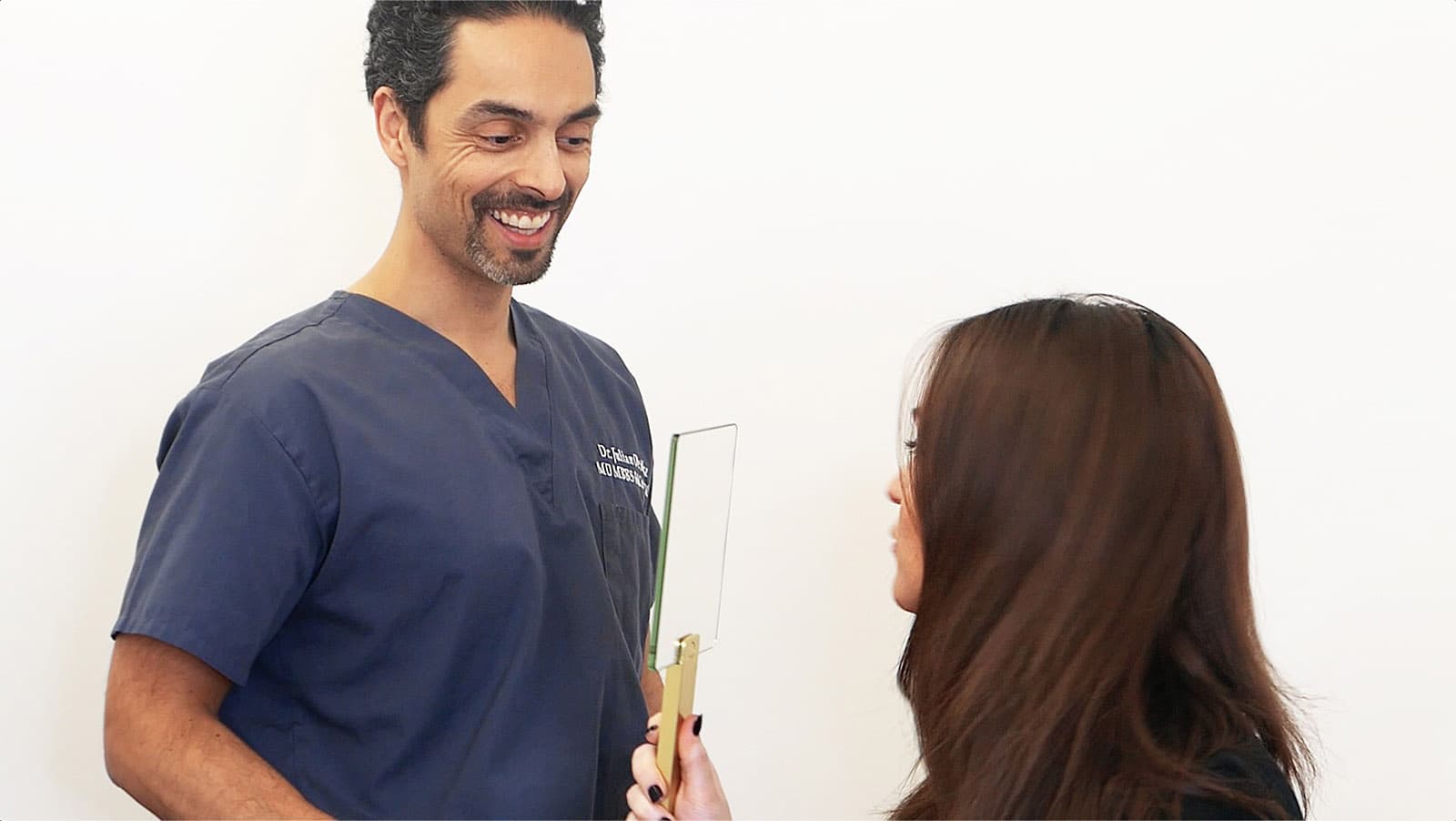
Twilight Sedation: A Gentler, Safer Approach to Chin Implant Surgery
Dr De Silva performs chin implant surgery using twilight sedation, a controlled and comfortable technique that avoids the risks and grogginess of general anaesthesia. Patients remain deeply relaxed, maintain natural breathing, and experience faster, smoother recovery — a particularly effective approach for chin augmentation, helping reduce swelling, minimise discomfort, and support a more comfortable early healing process.
Why Choose Dr De Silva in Harley Street, London ?
“We are proud to have over 1000 5* reviews. My focus has always been to be the very best at what I do, to continually innovate to provide World Class leadership with my team, my patients and my associates. My mission is to help every patient be the very best version of themself with World-Class services, life-long follow up with complimentary facial aesthetic procedures.”
Author of the Blepharoplasty Book, The Patient Guide to Blepharoplasty & Eyelid Surgery, to help our patients make the best decisions we gift this book to all our patients. In a world of increasing complexity and misinformation, his passion has been focused on providing sincere advice, low risk and fast recovery procedures.
As an Artist, all of Dr De Silva’s portrait paintings are vision in the World Class Facility at 23 Harley Street, custom built for Facial Treatments.
Dr Julian De Silva has Taught Surgery to other surgeons in the USA for over 8 years. “I have always been a passionate teacher and as director of the course I am committed to inspiring the next generation of surgeons.”
As a father and a Family Man he understands how important our appearance, health and well being is for happiness. Dr De Silva is in demand, please be patient if we are unable to offer you an appointment immediately, Dr De Silva is a detailed surgeon, he takes extra time with every patient to understand your needs and expectations, facial treatment is a blend of both precision and artistry, and takes time.
Only the Face
By focusing entirely on only facelift & facial cosmetic surgery procedures, Dr De Silva is able to provide the expertise that can only come with specialisation. Dr De Silva has authored multiple books on patient education and care including Dr Julian De Silva's Blepharoplasty patient guide , Dr De Silva's Facelift & Neck Lift book and Rhinoplasty book.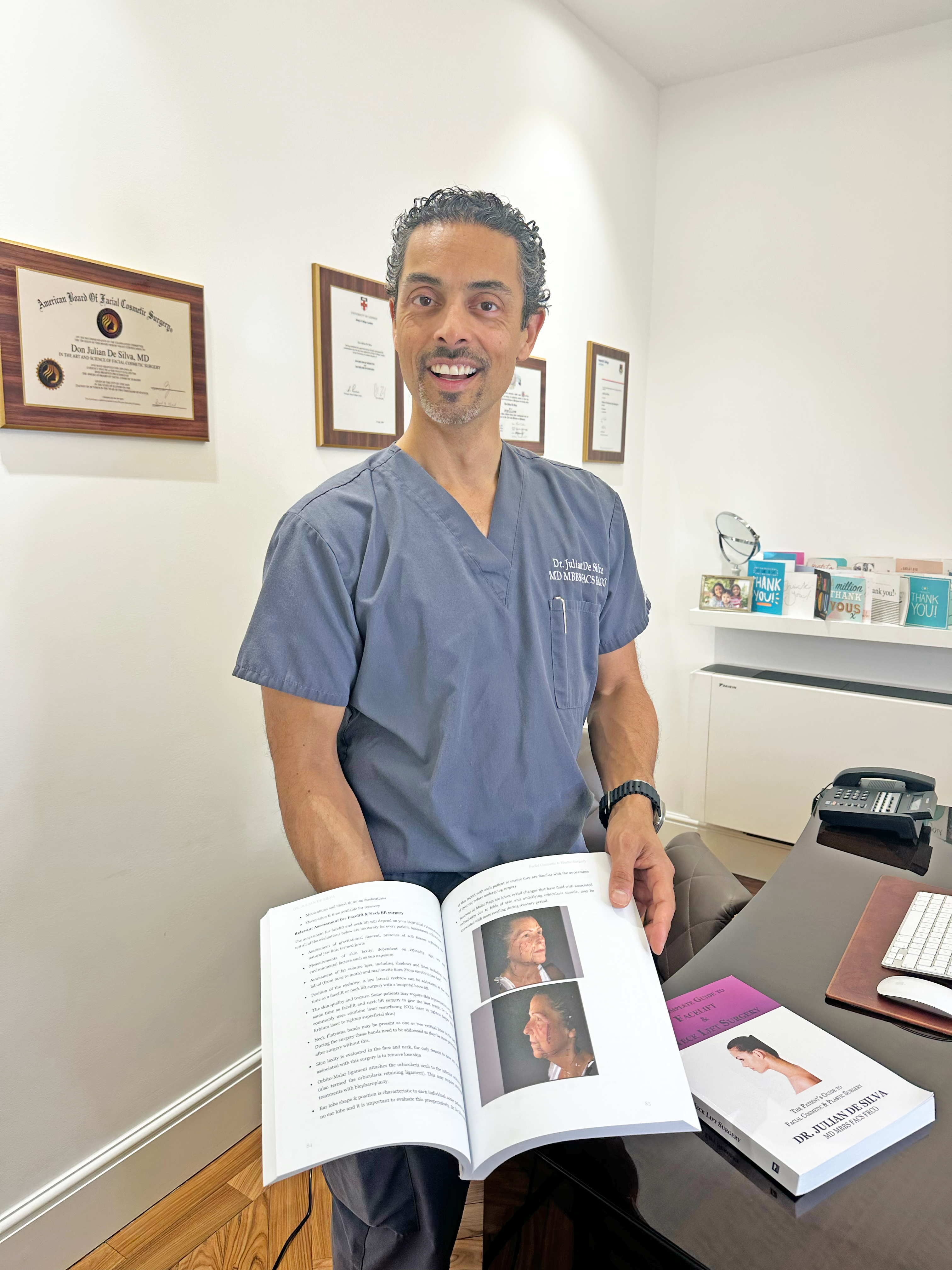
Fast Recovery
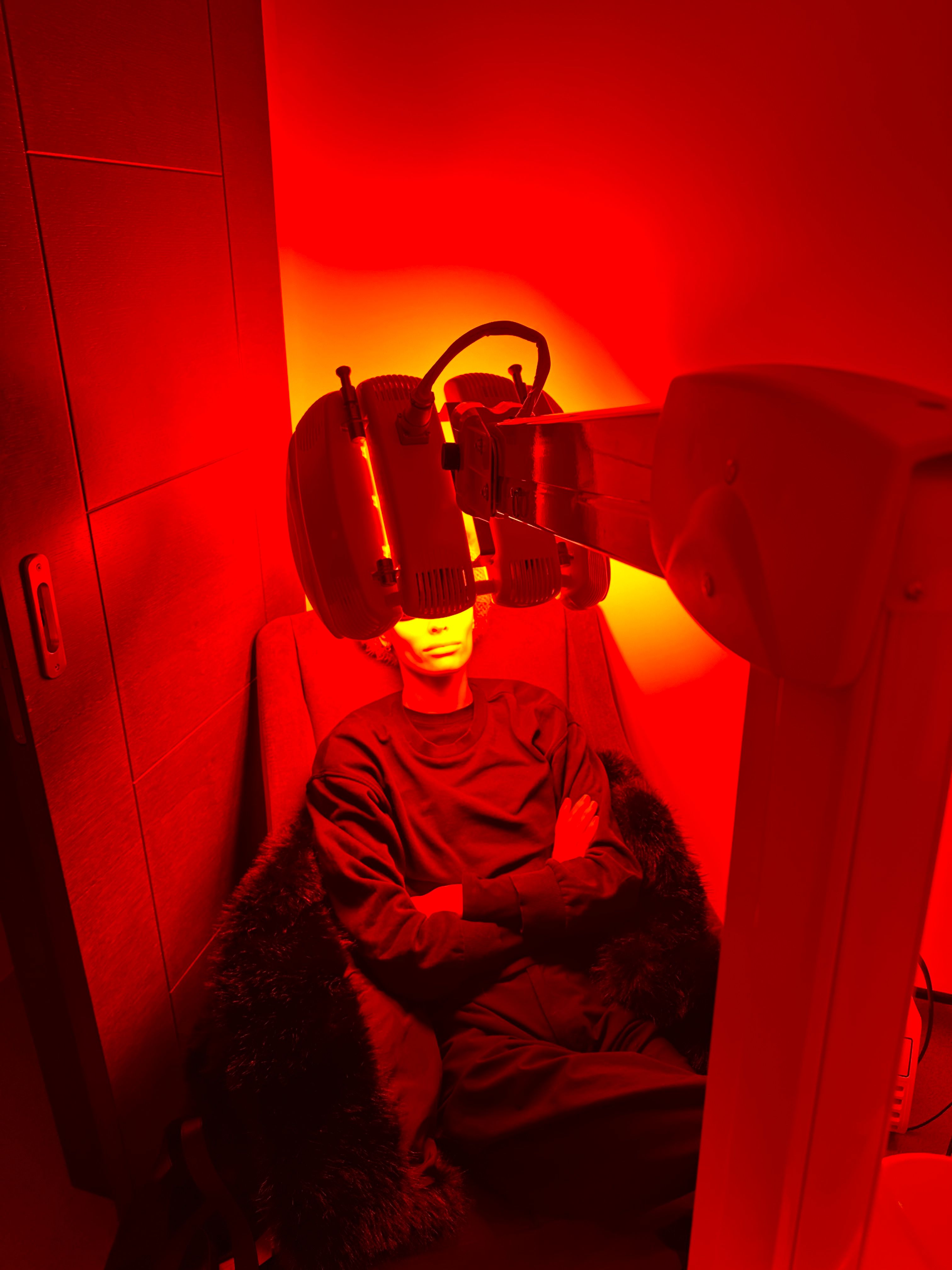
Dr De Silva has pioneered the advances in technology to speed up recovery with a combination regenerative medicine techniques, Oxygen and LED Therapy (e.g. Case Study- Fast recovery after facelift & neck lift surgery).
World Class Expertise
Dr De Silva also teaches other surgeons internationally and has contributed to the development of advanced surgical techniques, laser technology and stitch-less tissue adhesives. Dr De Silva and his team have won numerous awards over the years.

Natural Looking Results
Dr De Silva is a believer in the importance of artistry behind cosmetic results and focuses his skills at delivering natural looking results. Dr De Silva's portrait paintings decorate the walls of 23 Harley Street Clinic.

Chin Implant Technique And Procedure
Who needs a chin implant?
This figure on the left shows the normal position of the chin in relation to the lips. In a person with good facial proportions the lower lips is 1-2mm behind the upper lid and the chin is 1-2mm behind the lower lip. There are variations in facial harmony and balance based on genetics, gender and ethnicity.
The figure on the left shows the position of a recessed chin which is positioned (>5mm) behind a vertical green line drawn through the lips. With chin augmentation the chin is moved forward and the relative distance from the lips to the chin is reduced. Dr De Silva uses reference points on the face to evaluate proportions, however the artistry of chin augmentation also includes taking in to account gender, ethnicity and chin shape into account with chin shaping.
Are other procedures performed at the same time as chin implants?
Chin implants are often used in conjunction with rhinoplasty to improve facial proportions and give a more balanced result. In addition, neck fat reshaping can be beneficial for some patients to improve the natural jaw line and create an attractive angle between the jaw and chin.
In patients wither further signs of facial ageing, there may be laxity of the skin and soft tissues with the appearance of jowls, deep facial lines and neck skin folds. Patients with these signs of facial ageing would benefit from a face and neck lift in addition to the chin implant.
Why have a chin implant?
Common reasons why patients ask Dr De Silva for help
Common reasons why patients ask Dr De Silva for help
- Self-conscious about side profile
- Hiding chin e.g. avoiding photos
- Filler is okay as a short-term solution, but because it is a soft gel it provides limited improvement; costly and inconvenient long-term
- Consciously pushing jaw forward to hide chin
- Men often grow beard resulting in an older appearance
Dr De Silva recommends:
- Natural shaping of implant to jawline (key importance for a natural look)
- Avoid movement with fixing implant (Dr De Silva uses two 8mm titanium screws)
Chin implant has major advantages in recovery over alternative invasive surgery (genioplasty, jaw surgery) - For younger patients with a fuller neck, shaping and contouring of the neck with customised fat reshaping and reduction, and Dr De Silva’s signature tightening stitches provides greater definition in the neck
- With Dr De Silva’s sedation anaesthesia patients can go home less than 1-hour after the procedure
Chin Impant Before & Afters
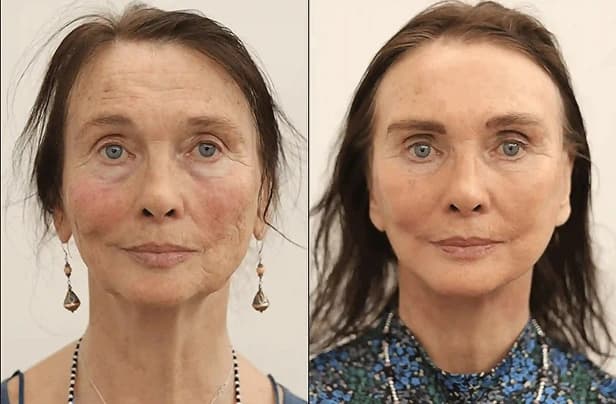
Dr De Silva has transformed thousands of faces through his unique surgical techniques. Below is a small sample of some of his transformations.
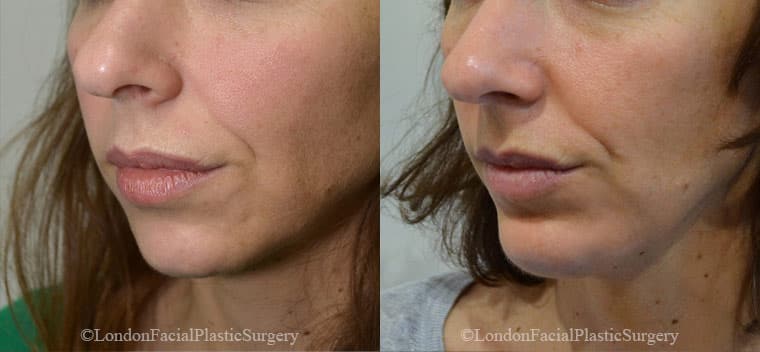
This woman in her 30s sought improvement for a recessed, small chin that affected facial balance. Dr. De Silva performed a customized chin implant under twilight anesthesia, carefully shaping a high-grade silicone implant to create a natural, feminine jawline. After fine refinements, she was delighted with the balanced, natural-looking result.
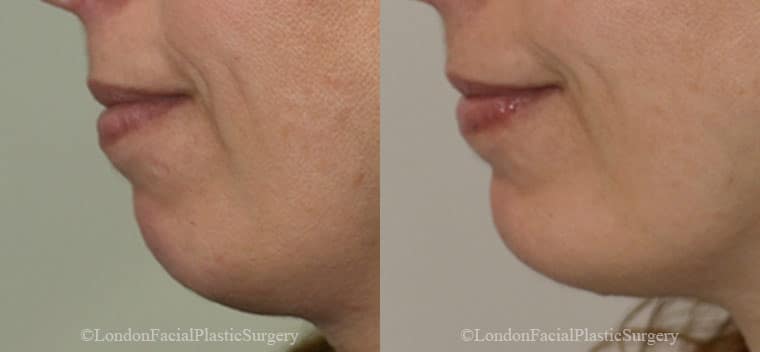
This patient had long been concerned about a weak chin but was initially too nervous to proceed. After consulting Dr. De Silva, she underwent chin augmentation with a lifetime, high-grade silicone implant and was delighted with her natural, confident result.
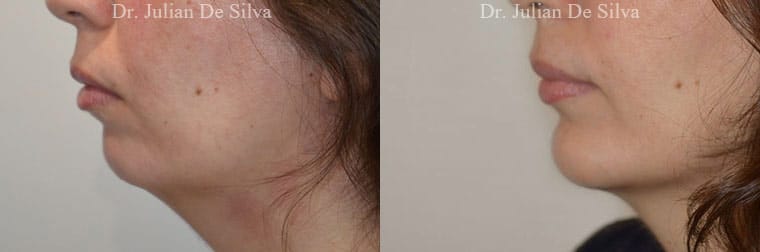
This woman had long been concerned about a weak chin and jawline and was understandably nervous about surgery. After a detailed consultation, Dr. De Silva performed a customized chin implant under twilight anesthesia, sculpting a high-grade silicone implant to create a natural, feminine jawline. She was very happy with her balanced, confident result.
This woman in her 30s sought improvement for a recessed, small chin that affected facial balance. Dr. De Silva performed a customized chin implant under twilight anesthesia, carefully shaping a high-grade silicone implant to create a natural, feminine jawline. After fine refinements, she was delighted with the balanced, natural-looking result.
This patient had long been concerned about a weak chin but was initially too nervous to proceed. After consulting Dr. De Silva, she underwent chin augmentation with a lifetime, high-grade silicone implant and was delighted with her natural, confident result.
This woman had long been concerned about a weak chin and jawline and was understandably nervous about surgery. After a detailed consultation, Dr. De Silva performed a customized chin implant under twilight anesthesia, sculpting a high-grade silicone implant to create a natural, feminine jawline. She was very happy with her balanced, confident result.
What our satisfied clients are saying
“The whole process from start to finish has been outstanding. Dr Julian De Silva acted professionally from the outset, he listened very carefully to what I wanted and most importantly, delivered the best results I could have possibly asked for.”
Stephanie

Dr. Julian De Silva is a renowned facial cosmetic surgeon at Harley Street, London, specializing in facelift, blepharoplasty, and rhinoplasty. Known for natural-looking results, he has treated top celebrities and uses advanced technology for fast recovery. Dr. De Silva is also a recognized author and educator in aesthetic surgery.
Frequently Asked Questions
What is a chin implant, and what can it achieve?
What is a chin implant, and what can it achieve?
A chin implant is a surgical procedure that places a shaped implant over the chin bone to restore projection, definition and facial balance. A small or recessed chin (medically termed microgenia) can make the nose appear larger, soften the jawline and reduce the definition of the neck angle, all of which affect overall facial harmony. A well-placed chin implant restores the natural proportions of the face, bringing the chin into balance with the nose, lips and jaw. In women, this restores harmony and natural beauty. In men, a defined chin is one of the characteristics often seen as a sign of masculinity- a chin implant can meaningfully strengthen a male profile. In approximately 20% of patients seeking rhinoplasty, Dr De Silva identifies a small chin on profile assessment and recommends chin augmentation alongside nose reshaping to achieve the most balanced result.
What technique does Dr De Silva use for chin implant surgery?
What technique does Dr De Silva use for chin implant surgery?
Dr De Silva's preferred technique is insertion of the chin implant through a small hidden incision in the natural crease beneath the chin- the sub-mental approach. This incision is less than 15mm in length and is positioned discretely under the chin, making it difficult to see in everyday life. He specifically avoids the intra-oral approach- insertion through the inside of the mouth, as this carries a higher risk of infection, longer recovery, and disruption to one of the lip muscles that affects fine movements. Each implant is individually sculpted to the patient's unique jaw line, as every jaw line is different and requires a different three-dimensional enhancement. Dr De Silva secures every implant with specialist titanium mini-screws to prevent movement or rotation; a complication he has treated in patients operated on elsewhere. These screws are approximately 8mm in size, cannot be seen or felt, and do not trigger airport security.
What type of implant material does Dr De Silva use, and is it permanent?
What type of implant material does Dr De Silva use, and is it permanent?
Dr De Silva's preference is silicone chin implants. Silicone is lifelong in durability, can be precisely sculpted to fit each patient's individual jaw line, and, unlike most implant materials, can be completely removed if a patient ever wishes to reverse the procedure. This is a meaningful distinction: other materials used in chin augmentation, including Medpor and Gore-Tex, are significantly more difficult to remove because surrounding soft tissue grows into the material over time. Silicone implants remain separate from the surrounding tissue, making reversal straightforward. The implant requires no ongoing management once in place - superficial stitches are removed at one week, and the remaining internal stitches dissolve over three to six months.
Can a chin implant be combined with rhinoplasty or facelift surgery?
Can a chin implant be combined with rhinoplasty or facelift surgery?
Yes, and it frequently is. Chin implant surgery is one of the most commonly combined procedures in facial cosmetic surgery because facial balance and proportion are assessed as a whole. A small chin on the side profile creates an imbalance that makes the nose appear larger and the neck less defined, addressing both the nose and the chin together produces a more harmonious result than treating either in isolation. Dr De Silva commonly combines chin implant surgery with rhinoplasty, facelift and neck lift surgery. The practical benefit is a single recovery period rather than two. The chin implant procedure itself takes less than one hour and adds minimal additional recovery time when combined with a longer procedure.
What is the recovery from chin implant surgery?
What is the recovery from chin implant surgery?
Chin implant surgery is performed under twilight sedation as an outpatient procedure; patients go home approximately thirty minutes after the procedure completes. Recovery is straightforward and significantly faster than procedures requiring general anaesthesia. A course of antibiotics is given for one week as a preventative measure against infection. Superficial stitches are removed at one week. A soft diet is advisable for the first week to avoid straining the jaw. Most patients feel comfortable being seen socially within one to two weeks, and normal activities can resume shortly after. Some temporary numbness in the chin area is normal as the nerve that provides sensation to this area adjusts- this typically resolves as healing progresses. Final results are visible once swelling fully resolves, typically within six to eight weeks.
What are the risks of chin implant surgery?
What are the risks of chin implant surgery?
Chin implant surgery is a straightforward and safe procedure with a well-understood risk profile. The most relevant risks are infection, bleeding and implant movement over time. Infection risk is minimised by Dr De Silva's preference for the sub-mental approach over intra-oral insertion, and by a preventative course of antibiotics. Implant movement - a complication Dr De Silva has corrected in patients operated on elsewhere, is specifically addressed by sculpting a narrow, deep pocket beneath the facial muscles and securing the implant with specialist titanium mini-screws. Scar complications occur in fewer than one percent of patients. Temporary numbness in the chin area is expected during healing and resolves as sensation returns. All risks are discussed in detail at consultation before any decision is made.
Am I a suitable candidate for a chin implant?
Am I a suitable candidate for a chin implant?
A chin implant is appropriate when the chin is proportionally small or recessed relative to the rest of the face, creating an imbalance that is visible- particularly on the side profile. This imbalance can be genetic or can develop as part of the ageing process. Some patients present specifically requesting chin augmentation; others discover the recommendation at a rhinoplasty or facelift consultation when Dr De Silva's profile assessment reveals that a small chin is affecting the overall facial harmony. Good general health, non-smoking and realistic expectations are the standard candidacy requirements. The consultation is the right place to assess whether a chin implant is appropriate and, if so, what size and shape would achieve the most natural and balanced result for your individual face. Computer imaging can be used to visualise the expected outcome on your profile before any decision is made.